Related: How to Find an Ethical Bank and Super Fund in Australia
Are Pearls Ethical? A Guide to Sustainable and Regenerative Pearl Farming

In partnership with Arapawa Blue Pearls
Pearls are generally considered one of the lower-impact choices in fine jewellery, but how ethical they are depends largely on how and where they were farmed. Cultured pearls from responsible small-scale farms are a better alternative to mined gemstones, while industrial-scale operations carry more environmental risks. This guide covers what to look for and what questions to ask before you buy.
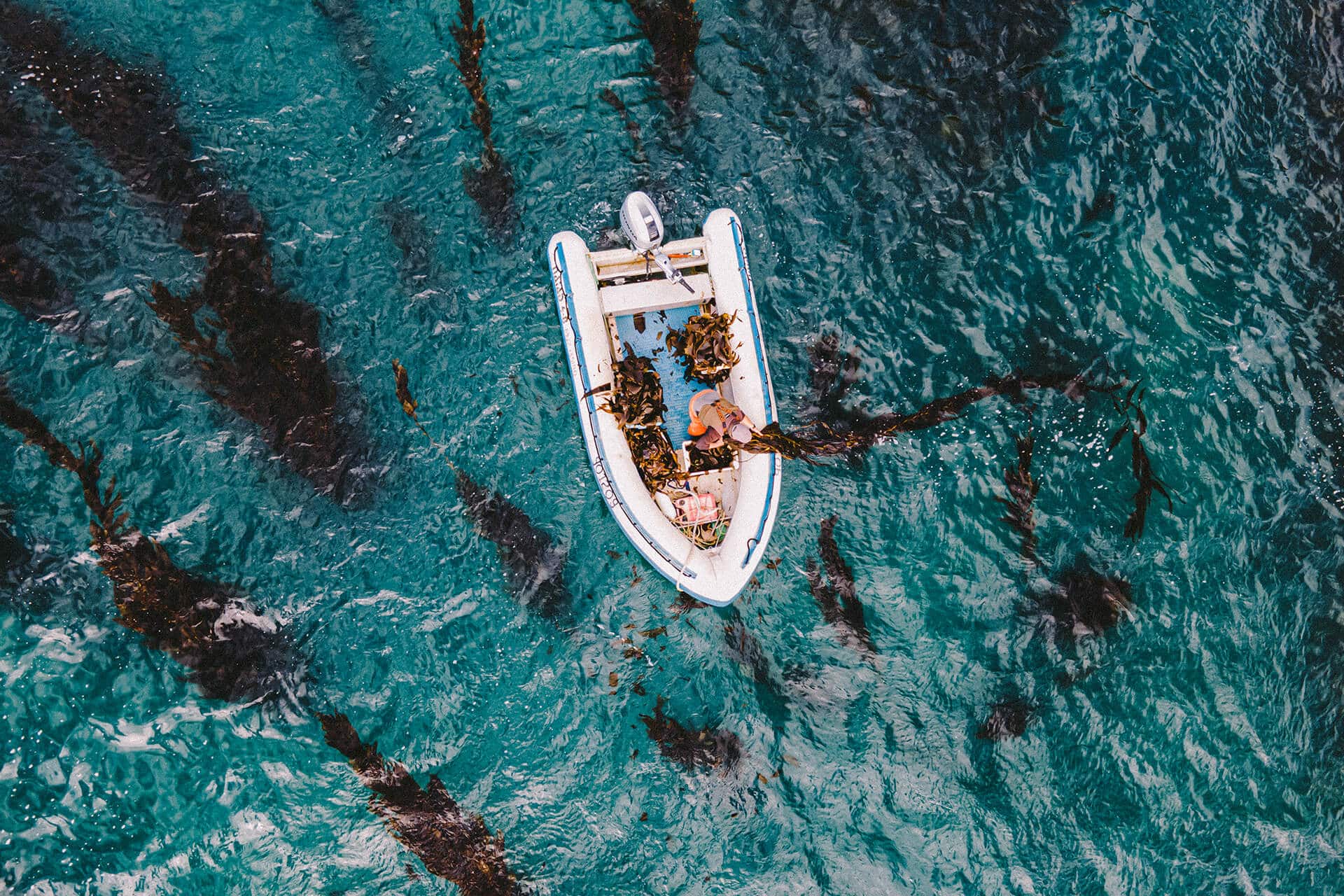
At first glance, pearls can feel like a relatively low-impact choice in the sustainable jewellery space. They come from the ocean, they’re made by living creatures, and they aren’t associated with open-cut mines or heavy machinery.
But pearls, like anything else we wear, have an industry behind them, and once you start looking a little closer to how they’re produced, the ethics behind them are a little more nuanced.
Are cultured pearls ethical?
For most of history, pearls were collected from the wild, with divers returning repeatedly to known oyster beds and opening shell after shell in the hope of finding a naturally formed pearl. It was slow, physically demanding work, often carried out in dangerous conditions, and the success rate was low enough that very large numbers of oysters were harvested for a very small number of pearls.
As demand increased, many of these beds were worked beyond their ability to recover, and concerns about both environmental damage and labour practices grew harder to ignore. Over time, most wild pearl fisheries either collapsed or were shut down, and today, wild-harvested pearls are rare and tightly regulated.
Modern pearl production developed as a response to the decline, and almost all pearls sold today are cultured. So now the ethics around the industry are focused more on how it’s farmed and how it impacts the health of the surrounding marine environment.

Arapawa Pearl’s pāua, Aotearoa’s native abalone
Pearl formation is a fascinating process, and happens when a mollusc responds to an irritant that becomes lodged inside its soft tissue. Unable to expel it, the animal protects itself by coating the irritant in nacre, building up microscopic layers over time. Often described by scientists as a biological “brick-and-mortar” system, that slow accumulation of nacre is what gives pearls both their strength and their characteristic lustrous sheen.
How pearl farming works today
Cultured pearl farming works by initiating that same process in a careful procedure known as grafting or seeding. An art form that can take years to master, a trained technician inserts a small bead along with a piece of donor tissue into the mollusc.
After seeding, the molluscs are returned to the water, typically suspended in baskets or nets at specific depths, chosen to balance food availability, water movement and temperature, where they continue to feed and grow while depositing nacre around the bead. Over the following years, farmers regularly clean the shells, remove marine growth, and monitor the animals for stress or disease while the pearl develops. A process that can take as little as a few months or up to several years, depending on environmental conditions. In warmer tropical waters of the Indo-Pacific region, pearls may form more quickly, while the colder or more stable environments of Aotearoa (New Zealand) tend to produce slower growth and thicker nacre over longer periods.
In most farming environments, molluscs can be reseeded after a pearl is harvested and used again, sometimes producing multiple pearls over their lifetime. But in some cases, particularly where a species is more fragile, the animal is harvested just once. Either way, the process requires long timelines and very careful handling. Things like poor water quality, overcrowding or rough treatment of the molluscs can compromise both the health of the animal and the quality of the pearl.
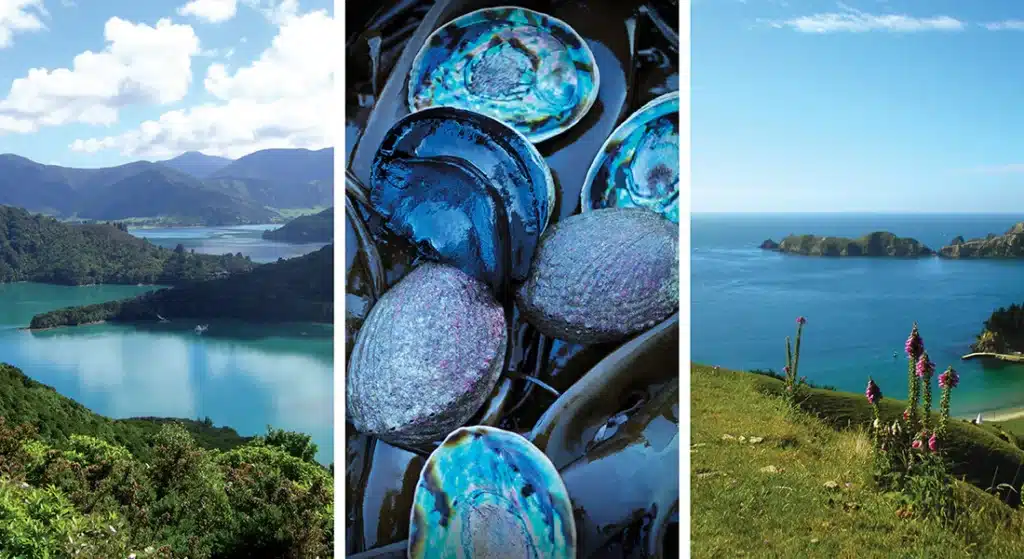
Arapawa Blue Pearls: a regenerative approach to pearl farming
Based at Whekenui Bay on Arapawa Island, a remote corner of the Marlborough Sounds, you’ll find Arapawa Blue Pearls. A pearl farm run by Antonia and Mike Radon, both divers with long histories working with pāua, Aotearoa’s native abalone. They’ve raised their family on the island while building a small-scale aquaculture operation around pāua, guided by the idea of kaitiakitanga, acting as guardians of both the animals and the place they live.
Unlike oysters, pāua have a single shell and are easily damaged, which makes pearl cultivation slow and highly hands-on.
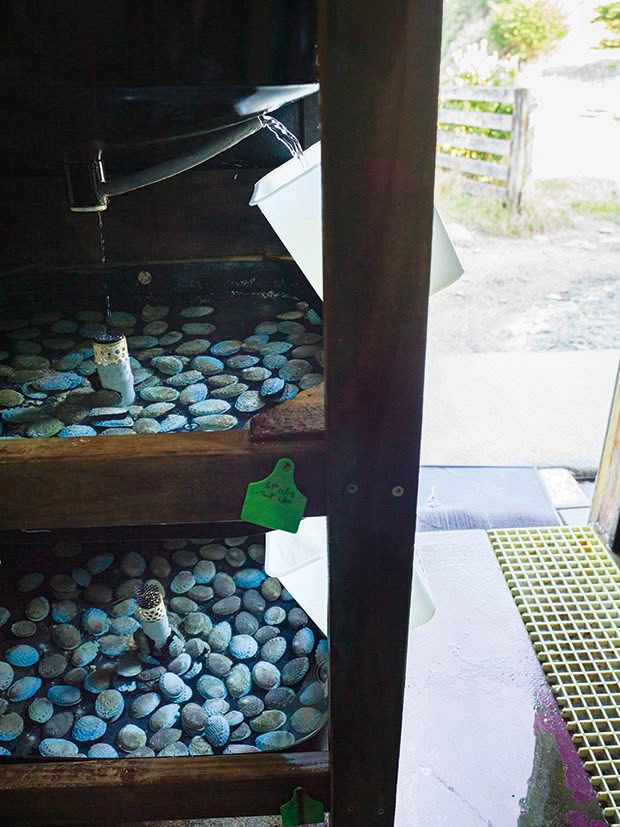
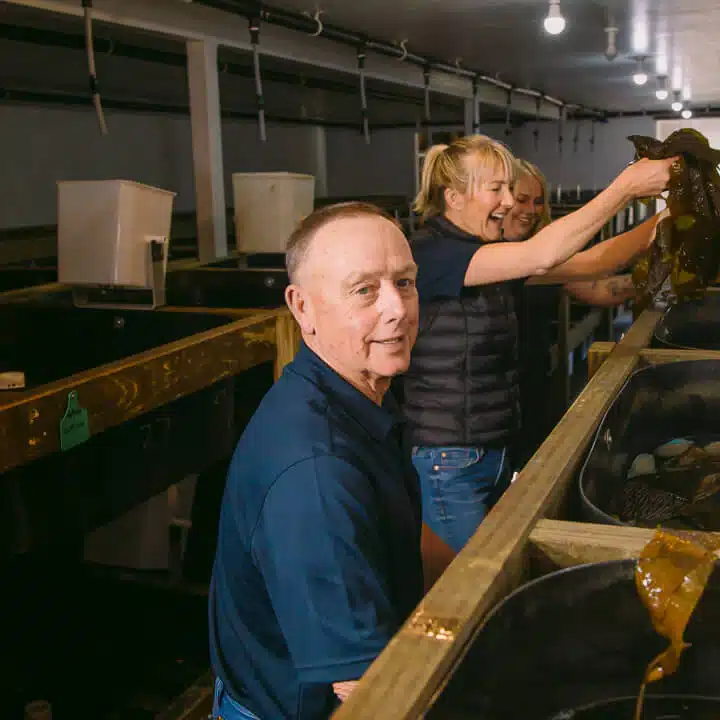
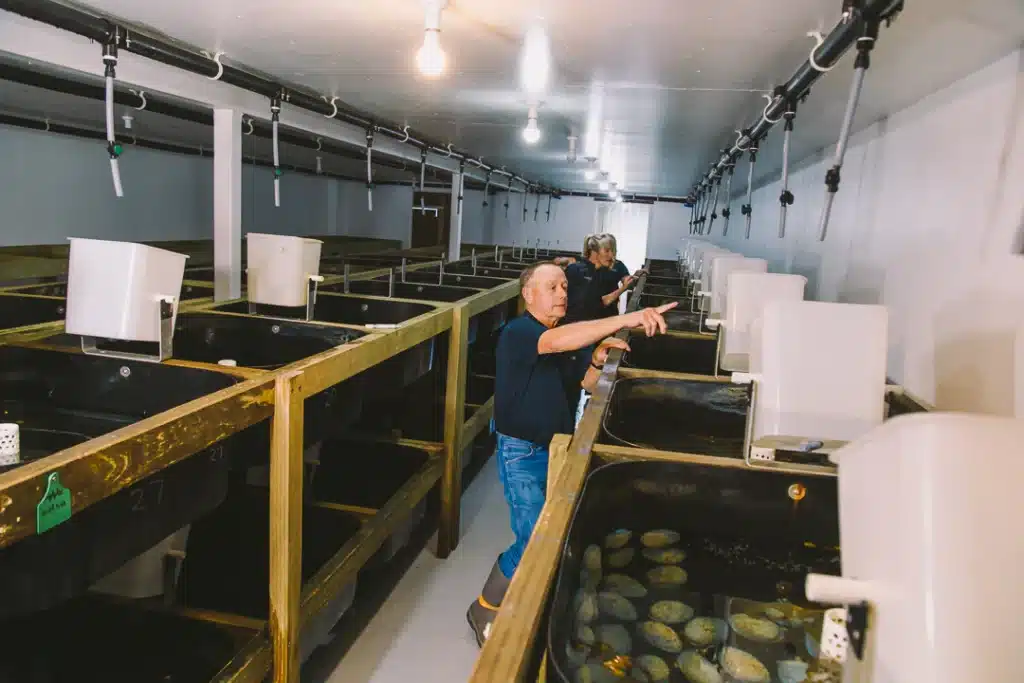
Much of the farming happens at the on-land hatchery and nursery system, where pāua are raised from fertilised eggs in cool, oxygen-rich seawater designed to mimic Cook Strait conditions. The result is a small number of intensely coloured blue, green and teal pearls that reflect the pāua shell itself.
Survival rates at Arapawa’s farm are vastly higher than in the wild, where only a tiny fraction of pāua ever reach adulthood. Some are raised specifically for pearl production, but many more are returned to the ocean as part of the farm’s commitment to regeneration and care for a species considered a taonga (something treasured).
That reseeding work became especially important after the 2016 Kaikōura earthquake, which lifted large stretches of seabed out of the water and destroyed pāua beds along parts of the coastline. Juveniles raised at Arapawa were returned to affected areas, and reseeding continues today. Over time, pāua populations in these regions have recovered and, in some cases, are now larger and more resilient than when the farm began.
It’s a system where growth is allowed to happen at its natural pace, so the farm’s production stays deliberately small. There’s no way to speed the process without compromising the pāua or the moana they depend on, so the farm operates within those limits. Pearl quality, animal welfare and environmental stability are treated as inseparable.
How to buy ethical pearls: what to look for
An ethical and environmentally sustainable pearl producer or jewellery brand should be able to tell you exactly where the pearls were raised, ideally down to the region rather than just the country, because local water conditions shape how pearls develop and how farms are managed.
Know the Species
Saltwater oysters, freshwater mussels, and pāua each produce pearls differently, over different timeframes, and under different farming conditions. When a brand can name the species and explain the basics of how those pearls are formed, it usually suggests they have a closer relationship with their supply chain rather than buying through multiple layers of wholesalers.
Check how long it takes to grow the pearls.
A producer should be able to give you a rough timeline, and that timeline should be measured in years, not weeks. Pearls form slowly, layer by layer. Faster production generally relies on warmer water and higher intervention. If a brand can’t tell you how long its pearls take to grow, that information is probably coming from somewhere else.
Ask about the size of their operation.
You’re looking for some sense of scale, such as a small farm, limited harvests, or at least what “small” means to them. You don’t need exact numbers, but you should be able to get a sense of whether a farm is small and place-based or producing at industrial volumes. Generally, in aquaculture, higher-intensity farming and higher stocking densities are linked to increased waste and disease risk, as well as greater pressure on the surrounding environment.
You can ask what happens to the animals after harvest. In some pearl systems, oysters can be reseeded and reused, reducing the need to constantly collect new animals. In others, shells and by-products are reused rather than discarded.
Frequently asked questions about ethical pearls
Are cultured pearls ethical?
Cultured pearls can be, depending on the farm. Responsible small-scale operations prioritise the health of the molluscs, maintain clean water conditions, and in some cases return animals to the ocean as part of conservation work. Industrial-scale operations with high stocking densities carry greater environmental risks. The key is knowing where your pearls come from and being able to get a straight answer from the brand about how they’re farmed.
Are pearls more sustainable than mined gemstones?
Generally yes. Pearl farming doesn’t involve open-cut mining, habitat destruction, or the heavy chemical processing associated with most mined gemstones. Well-managed pearl farms can actively benefit marine environments: oysters and mussels filter water naturally, and some farms contribute to reef and population restoration. The environmental footprint is significantly lower than diamond or gold mining, though it still varies considerably between operations.
How long do ethical pearls take to form?
It depends on the species and environment. In warmer tropical waters, pearls can form in one to two years. In cooler, more stable environments like the Marlborough Sounds in New Zealand, where Arapawa Blue Pearls operates, the process takes considerably longer and produces thicker nacre. A producer who can give you a specific timeline usually has a closer relationship with their supply chain than one who can’t.
What species produce ethical pearls?
The most common are saltwater oysters (used for South Sea and Akoya pearls), freshwater mussels (which produce most of the pearls sold globally), and pāua, Aotearoa’s native abalone, which produce the rare blue and green pearls Arapawa Blue Pearls is known for. Each species requires different farming conditions, timelines, and handling, and each carries different welfare considerations.
Are pearls vegan?
Pearls are not vegan because they are produced by a living animal. The process of seeding a mollusc with an irritant to initiate pearl formation involves intervention, and in some farming systems fewer than half of the animals survive the culturing process. For anyone avoiding animal products entirely, vintage or antique pearls are the most considered option since no new farming is required, and the pearl already exists. If you do choose new pearls, small-scale operations like Arapawa Blue Pearls, where animal welfare and survival rates are central to how the farm is run, represent the more careful end of the industry.