Related: How to Compost Without a Backyard
DIY Dog Poo Compost Bin: How to Build One (and What to Buy)

This is a simple DIY dog poo compost bin you can safely build to keep dog waste out of landfill, using a large drum, some gravel, and a microbial starter mix. It takes a couple of hours and costs less than $50.
If you live with a dog, you live with dog poo. It’s non-negotiable.
And every day, millions of us scoop it up in plastic bags, tie a knot, and toss it in the bin. Where it sits, sealed off from air and microbes, preserved like a grim little time capsule.
Then it slowly breaks down without oxygen, releasing methane, a greenhouse gas 25 times more potent than carbon dioxide. Australia has around 7.3 million dogs, producing an estimated tonnes of waste heading straight to landfill.
But it’s your lucky day, because there is a better way: A simple in-ground dog waste composter you can build yourself.
It’s not the most glamorous DIY you’ll ever do. To be fair, it’s not even useful (you won’t be fertilising anything with the results). But it is a more responsible way to deal with something that’s otherwise going straight into landfill.
Can you compost dog poop?
Yes, but not in your regular compost bin, and not in a way that produces compost you can use on food gardens. Dog waste contains pathogens like E. coli, Giardia, and intestinal worms that standard backyard compost systems don’t get hot enough to destroy. A dedicated in-ground system, kept completely separate from your food and garden compost, is the safe way to do it.
*This Is Not Compost You’ll Use*
I repeat, dog poo can contain pathogens like E. coli, Giardia, and intestinal worms. Backyard compost systems aren’t hot enough to kill those nasties, and they don’t just disappear over time.
This system exists for one purpose only:
To break down dog poo in the barrell, instead of sending it to landfill. That’s it. Here’s how to build one.
What You’ll Need For the dog poo compost bin
- One large plastic drum with a secure, sealing lid (second-hand options like food-grade barrels are ideal)
- Medium-sized pebbles or gravel (for drainage)
- An electric drill (for ventilation holes)
- A saw (to remove the base of the drum)
- A shovel (for digging the installation hole)
- Microbial starter mix such as Ensopet Starter. (This blend of wheat, sawdust, and microorganisms accelerates decomposition and helps control odour and pathogens) You can buy it here and buy it here.
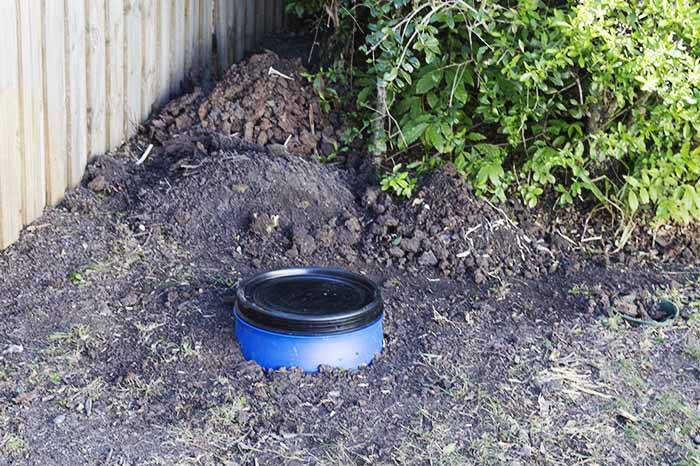
How to Build Your Dog Poo Compost Bin
Step 1: Prepare the site
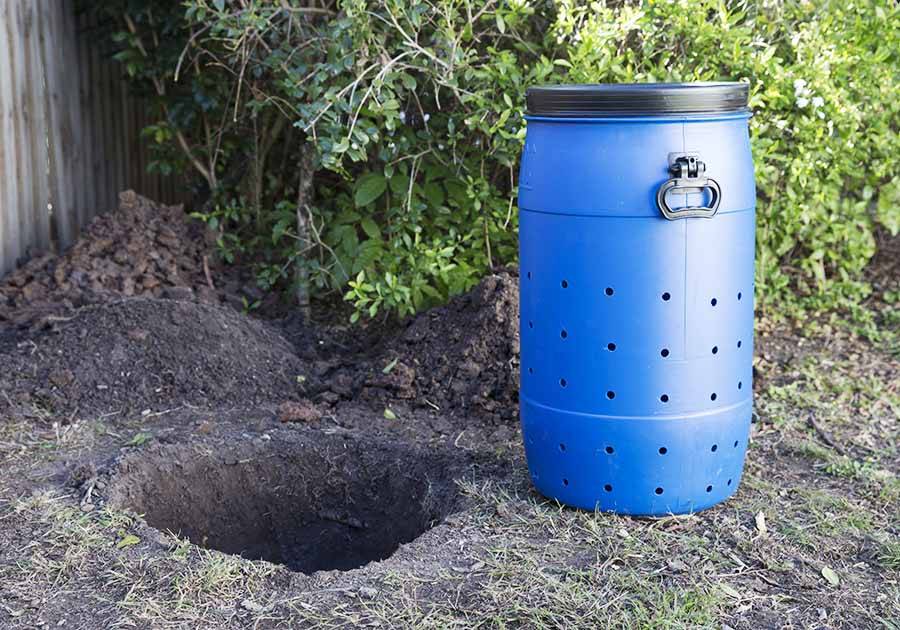
Use the drum lid to mark out the area. Dig a hole deep enough to fit the drum snugly, leaving just the top rim and lid above ground. This keeps odours contained and the system looking tidy in the yard.
Step 2: Modify the drum
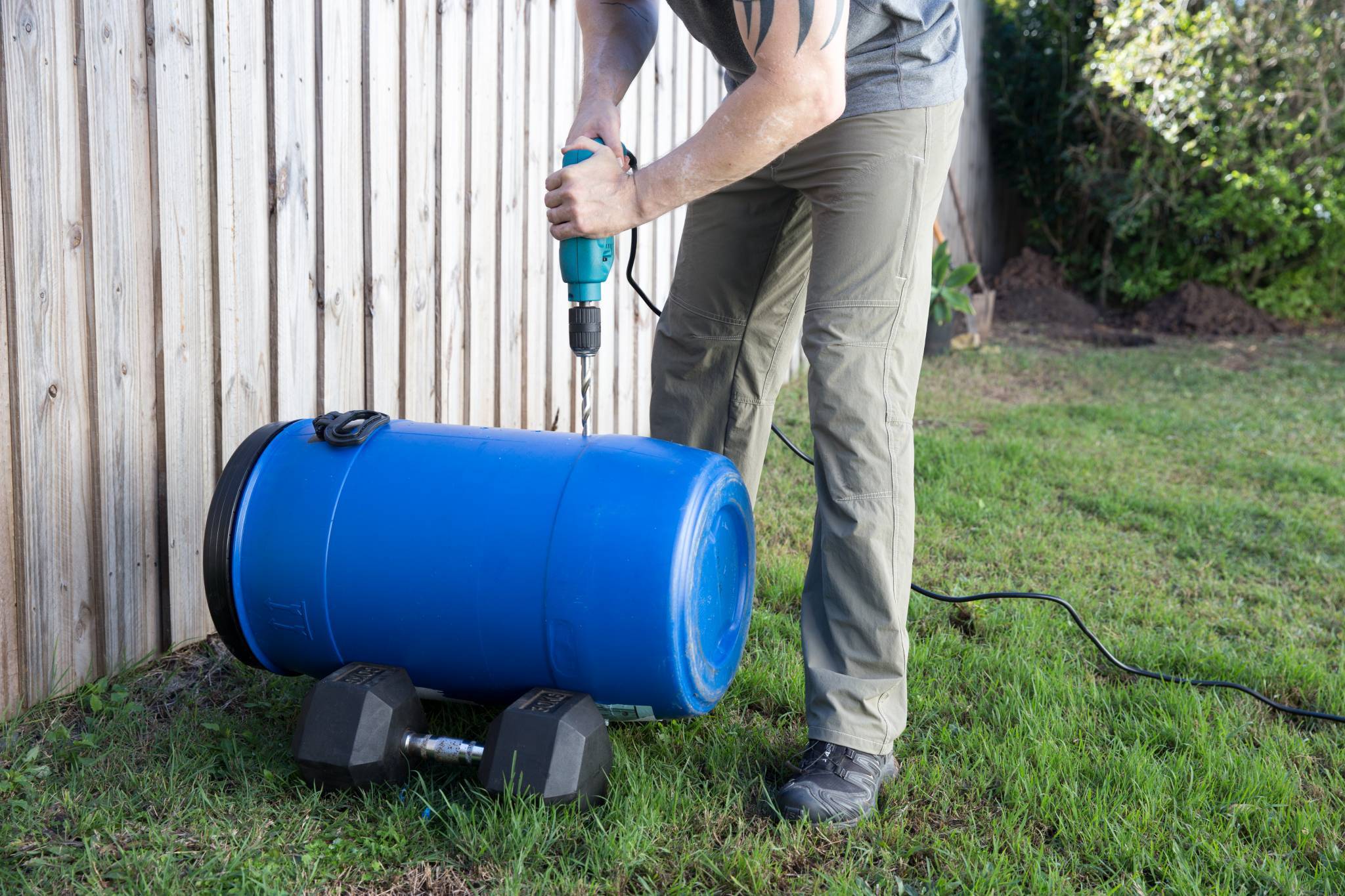
Starting halfway down the drum, drill several rows of holes around the sides. Avoid drilling above the halfway mark. Drill holes around the base as well, then use a saw to cut the base off completely. These holes let moisture drain and air circulate, creating the aerobic conditions needed for waste breakdown.
Step 3: Install the drum
Place a 5 to 10cm layer of pebbles or gravel in the bottom of the hole. Insert the drum on top. Backfill around the sides with the soil you removed to hold it firmly in place.
Step 4: Start the composting process
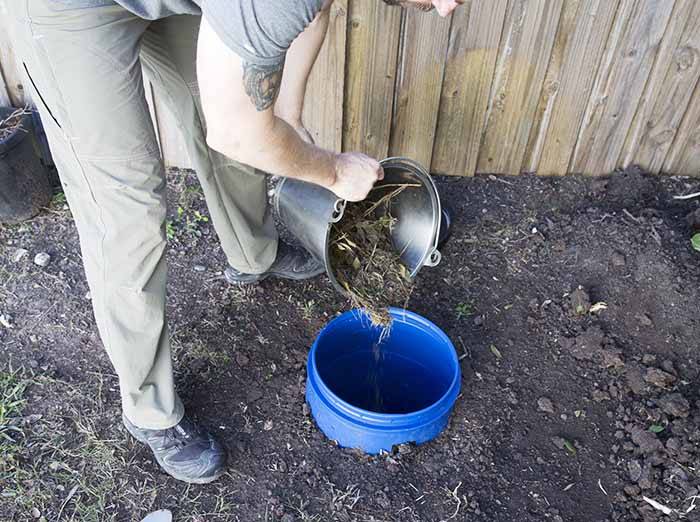
Add half a bucket of compost from a mature compost bin to kickstart microbial activity. Introduce a handful of compost worms if you have them. Sprinkle a generous handful of microbial starter mix over the top.
Ongoing Maintenance
Each time you add fresh dog waste, sprinkle a small amount of microbial starter mix over the top. Keep the lid sealed between uses to control moisture and odour. If the contents become too wet after rain, add dry material like shredded newspaper or more starter mix to rebalance.
With one or two dogs and regular maintenance, a 60-litre drum lasts a year or more before it’s full. The waste constantly breaks down inside, especially with the starter mix and a bit of heat.
When It’s Full
Stop adding waste and let the contents sit undisturbed for several months. You can leave it buried and cover it with soil, or remove the drum and start a new one nearby. The original site can be used for planting ornamental shrubs or trees once the material has fully decomposed, though it’s best to wait at least six to twelve months.
The best dog waste composters and pet poo composters to buy in Australia
If building your own isn’t your thing, these ready-made options do the same job.
EnsoPet Pet Waste Composter
The EnsoPet kit is an in-ground composter made from recycled plastic, designed specifically for pet waste. It works with dogs, cats, rabbits, and guinea pigs, and comes with a starter mix of natural microorganisms that break down waste and control odour. One of the most popular options in Australia and available through councils at a discount in some areas. Shop EnsoPet here
Tumbleweed Pet Poo Worm Farm
Available at Bunnings, the Tumbleweed Pet Poo Worm Farm uses composting worms to break down waste fast and produces organic fertiliser for ornamental garden beds. A good option if you already have a worm setup or want something that produces a usable end product. Shop at Bunnings
Pet Waste Wizard BioBin
A simple bottomless bin system that works on the same principle as the DIY version above, paired with Biomaster digester sachets that accelerate breakdown. Good for one to two large dogs and available online. Works especially well placed directly in a garden bed.
Frequently Asked Questions about composting dog poop
Can I use the compost in my garden?
No. This system isn’t about creating usable compost, it’s about keeping dog poo out of landfill. Dog waste can contain pathogens that backyard systems don’t destroy, so the end result should stay in the ground or go to ornamental beds only.
What’s the best way to compost dog poop?
An in-ground drum system is the most effective and odour-free method for most Australian backyards. You bury a large drum with drainage holes, add a microbial starter mix each time you add waste, and the material breaks down in the ground over time. The EnsoPet kit is the most popular ready-made version of this system in Australia. If you’d rather build your own, the DIY guide above works the same way, and costs less.
Can I put dog poo in my compost bin?
No. Your regular compost bin isn’t designed for dog waste and shouldn’t be used for it. Dog poo can contain dangerous pathogens that standard backyard compost doesn’t get hot enough to destroy, and mixing it with food or garden waste risks contaminating compost you’d otherwise use in the garden. It needs its own dedicated system.
What are the risks of composting dog poop?
The main risk is pathogen contamination. Dog waste can carry E. coli, Giardia, Salmonella, and intestinal worms. If the composting process isn’t hot enough or long enough to destroy them, and the resulting material comes into contact with edible plants or food preparation areas, it poses a genuine health risk. The in-ground system in this guide manages that risk by keeping the material contained and using microbial starter mix to break it down safely.
How long does it take for dog poop to decompose?
In a well-maintained in-ground system with a microbial starter mix, dog waste breaks down significantly within a few weeks, though full decomposition takes several months. Without a digester or starter mix, dog poo left untreated can take a year or more to break down, and in a sealed plastic bag in landfill it can persist for decades.
What is the best compost bin for dog poo?
A large sealed drum buried in the ground works better than most above-ground options because it connects to the soil’s natural microbial activity and keeps odour contained. For a ready-made option, EnsoPet and the Tumbleweed Pet Poo Worm Farm are the two most reliable in Australia.
Can you use a regular compost bin for dog poo?
No. Dog waste needs its own dedicated system. A standard compost bin doesn’t reach the temperatures needed to destroy the pathogens in dog waste, and mixing it with food scraps or garden material risks contaminating compost you’d otherwise use safely.
How long does a DIY dog poo compost bin last?
With one or two dogs and regular maintenance, a 60-litre drum lasts a year or more before it fills up. Because the waste continuously breaks down inside with the help of the starter mix, the volume reduces over time.
What about cat waste?
Cat poo can carry toxoplasmosis, which is dangerous to humans. It’s best avoided in a home composting system.
Does it smell?
Not with proper drainage, airflow, and regular use of the microbial starter mix. If it starts to smell, add dry material like shredded newspaper and check the ventilation holes aren’t blocked.