Synthetic material is a versatile and cheap material. However, it now dominates the textile market. 75% of new fashion is now made from plastic and ends up in the ocean as microfiber pollution, eventually making its way onto our plates in fish.
According to Patagonia’s latest research, The Cleanest Line, microfiber pollution often originates from synthetic textiles (nylon, acrylic, polyester), with low-quality synthetic products shedding the most.
The connection between microplastics in the ocean, aka microfiber pollution, and clothing was actually found in 2011.
What are microfibers?
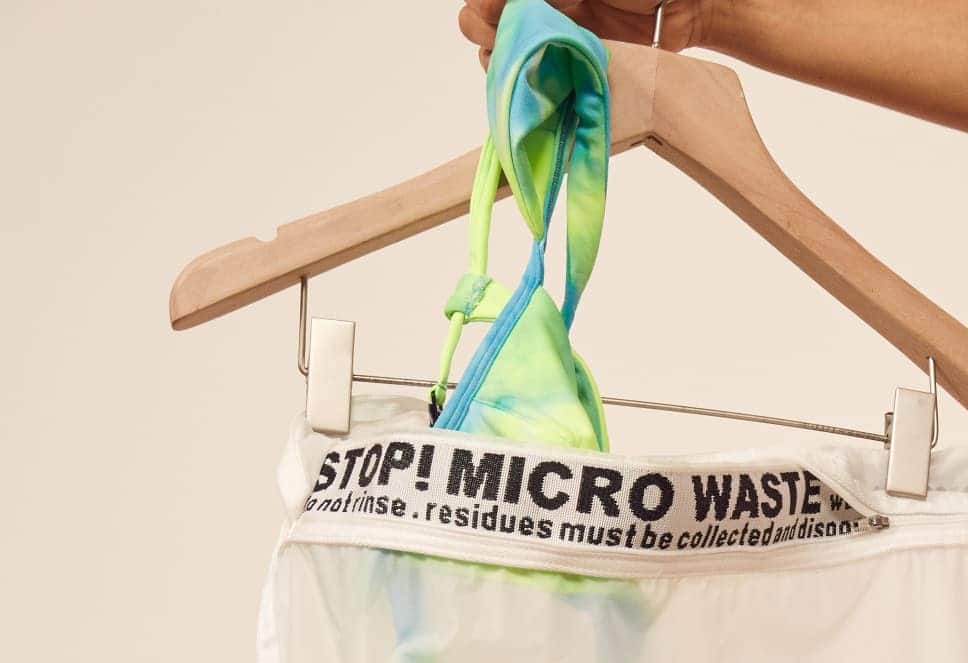
To break it down (no pun intended) – Microfibers are tiny synthetic fibres from synthetic apparel (Polyester, Nylon, Spandex, Rayon or Acrylic) that are less than 5mm in length. These tiny fibres shed from clothing when it is washed and manage to filter out into rivers and oceans.
There have been various scientific studies worldwide into the environmental effects of plastic in the ocean on marine life, with microfibers falling into the category of microplastics (small pieces of plastic that filter into the oceans and aquatic life). The conclusions from these studies are pretty shocking, showing that a huge number of microfibers are in oceans and rivers.
Sydney-based ecotoxicologist Dr Mark Browne and his team published a study in 2011 on the findings, ‘Accumulation of Microplastics on Shorelines Worldwide: Sources and Sinks’. The study found that the dominant source of plastic in the ocean was from microfibers from textiles. Mark went a step further, showing that by washing various textiles, over 2,000 fibres were released per wash into the environment.
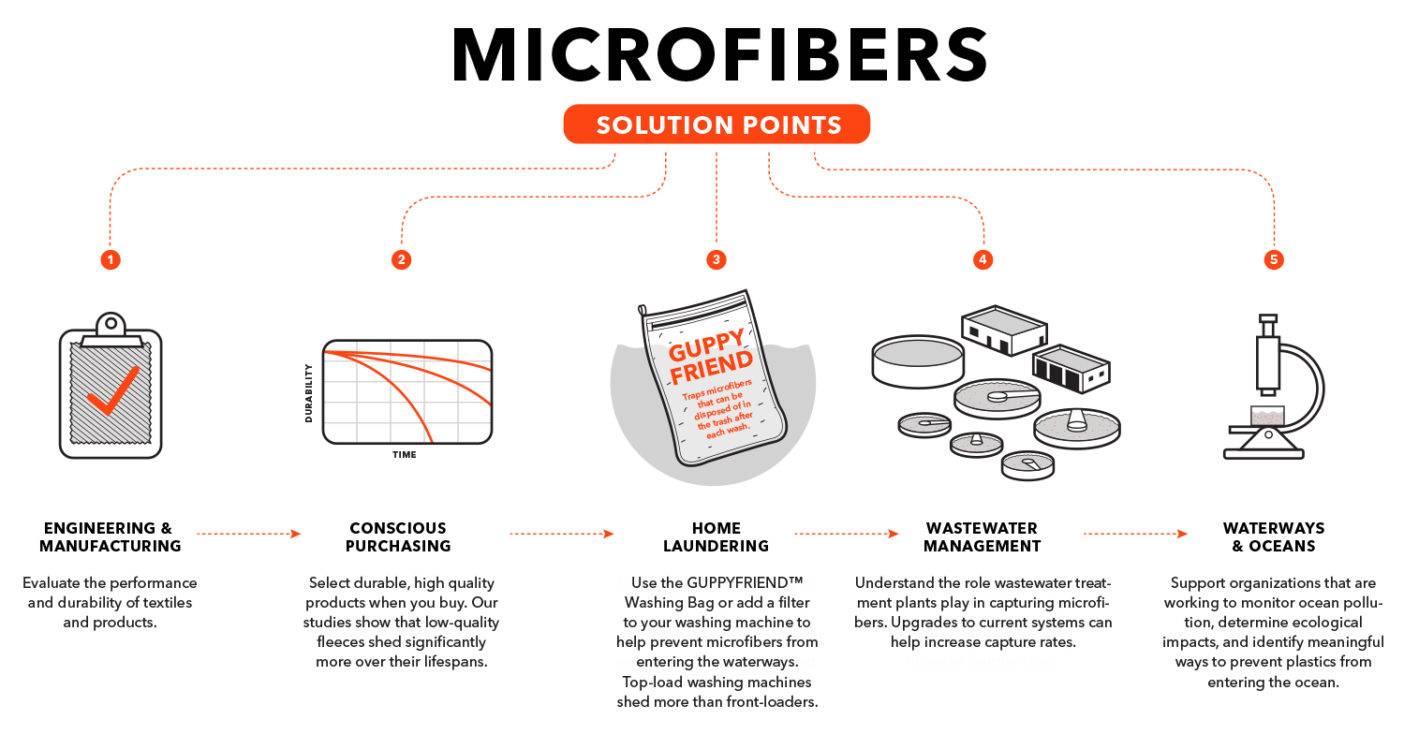
Image: Patagonia
Patagonia’s research
The outdoor apparel brand Patagonia has been a key change maker in the apparel industry, investing large funding grants into studies to find out more about microfibers.
A project called ‘MICROFIBER POLLUTION & THE APPAREL INDUSTRY‘ by the University of California, funded by Patagonia, researched the variables that could affect the release of microfibers and how that could be used to change the textile industry and social behaviour. This study revealed that the amount of microfibers released from clothing changes significantly between a number of factors: apparel age, fabric quality, washing machine type, fabric type and fabric construction. Basically, the older and poorer quality clothing washed in a top loader machine will produce vastly more microfibers. Sad news for second-hand and vintage shoppers (trust me, I’m devastated).
The (Imperfect) consumer solution to microfibers
The best consumer-available solutions to date have been the Cora Ball and the Guppy Friend, bags and filters that prevent microfibers from being washed away with the laundry water. But their efficacy has been questioned until now.
A study by the University of Toronto and the Ocean Conservancy found the microfiber filter Lint LUV-R captured an average of 87% of microfibers, keeping them out of rivers and lakes, while Cora Ball captured 26%.
“These results suggest that these two technologies added to washing machines could be an effective way to reduce microfiber emissions to the environment. While further investigations are needed to understand the relative contributions of microfibers from other textile products and their pathways to the environment, we know that textiles laundered in washing machines are one source of microfibers and that effective mitigation tools currently exist.”
There are many areas that need further research to help designers reduce microfiber shedding, mostly at the fabrication design level, but for now, it appears we’re on the right track.